 Australian Owned & Operated Company



Phone lines open 8am-8pm AEST
- Specials & New
- Fridge/Freezers
- Batteries
- Camping Canvas Bags & Storage
- BBQ Canvas Bag
- Camp Oven Canvas Bag
- Clear Top Canvas Bag
- Clear Top Tall Canvas Bag
- Doona/Pillow Case Bag
- Canvas Recovery Bag
- Recovery Tracks Canvas Storage Bag
- Canvas Air Compressor Bag
- Roof Top Canvas
- Canvas Toilet Bag
- Canvas Toiletry Bag
- Canvas Travel Bag
- Canvas Fire Pit Bag
- Canvas Swag Bag
- Canvas Folding Solar Panel Bag
- Canvas Induction Cooker Bag
- Premium Duffle Bag
- Universal Storage Bag
- Gas Stove Canvas Bag
- 45L Tough Storage Box
- 78L Tough Storage Box
- 156L Tough Storage Box
Camping Accessories- Camping Chair
- Camping Table
- Collapsible Range
- Pocket/Dash Organiser
- Hanging Camp/Kitchen Caddy
- Upright Organiser
- 12v Heated/Electric Blanket
- 3m Sand Safety Flag
- Premium Roof Top Bag
- Car Seat Organiser
- Dirty Gear Bag
- Premium Duffle Bag
- Half Length Roof Top Bag
- Kings Plus Premium Seat Covers (Pair)
- Premium Canvas Seat Covers
- Premium Neoprene Seat Covers
- Heavy Duty Seat Covers
- Paddleboards
- His and Hers Vacuum Travel Mug
- Ground Grabba
- Supa Peg
- First Aid Kits
- Outdoor Protection
- Firelighter
- Solar & Power
- 4WD
- Stores
- Tips & Tricks

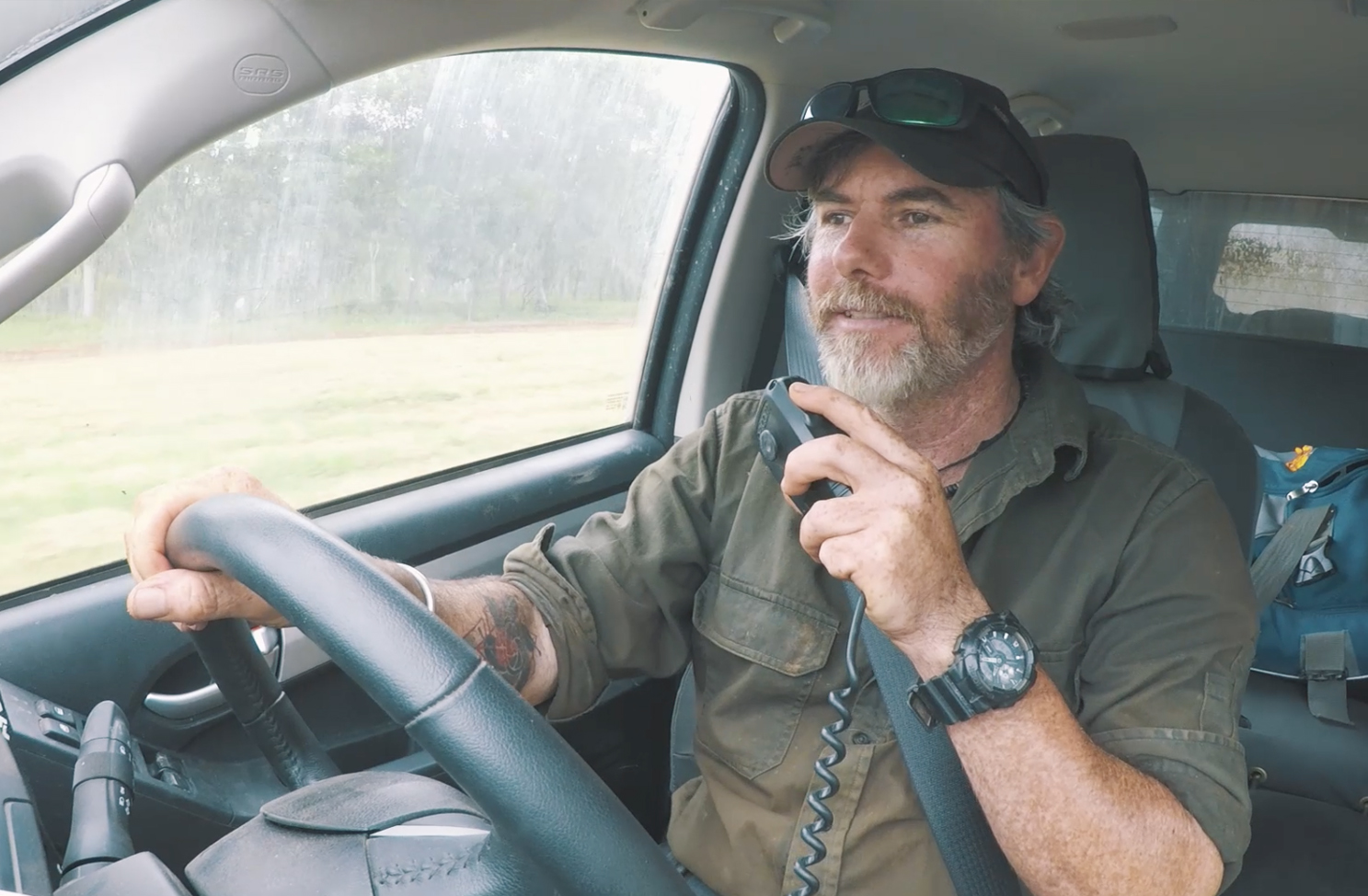
TIPS AND TECHNIQUES – UHF GLOVEBOX GUIDE
BETTER COMMS
How to get better performance from your UHF, and which channels you should and shouldn’t be using
UHF radios have got to be the best-value form of communication off-road. Having your own UHF allows you to communicate with other travellers and properties 10-20km away, and in some cases, even further. What’s better is that they don’t require licensing, they’re easy to install, you can pick one up for just a few hundred beer tickets, AND they’re 100% free to use – meaning you can head further into the scrub where mobile phones just won’t cut it, and still be in constant contact with your mates.
Here’s the thing, so many 4WDers we meet on the tracks don’t even realise that they’re not getting the best performance from their UHFs. Which is why we’re going to show you how to get better range, increased reliability and less chatter from other users with this all-in-one UHF cheat sheet.
“…over!”
CHOOSING A UNIT
Hand held versus in-dash, whichever you choose, you’ll need transmitting/receiving power. Most handhelds range from 0.5W-5W, while in-dash units range between 1-5W. Your best bet is to look for 5 Watt unit if you don’t want to be concerned about range, like the Oricom UHF 380, which is an in-car 5W CB Radio. Smaller watt handheld radios like the Oricom Handheld UHF285 are cheaper and great if you’re only using them for close range comms like spotting, but they’ll quickly lose clarity with distance and uneven terrain – which is where the larger 5W UHF will shine.
ARE BIGGER ARIALS BETTER?
When it comes to UHF aerials, bigger is not always better. As a general rule, the higher dBi rating of an aerial, the larger it is. That doesn’t mean a short, 3dBi aerial is less effective than a 9dBi; they just perform different roles in different terrains (read on for more info).
UNDERSTANDING DBI RATINGS
An aerial’s performance changes according to its dB rating, and each has its strengths in different situations.
- A low gain antenna between 2-4 dBi is well suited for hilly terrain but will lack range in flat, open terrain.
- Medium gain antennas in the 5-7 dBi range are a perfect all round antenna which works well in hilly and flat terrain. The Oricom ANU200 Antenna is a 6.5dBi gain Antenna, so it’s the perfect all-rounder
- And a high-gain antenna over 8dBi are good in flat terrain but poor in hilly terrain.
THE BEST PLACE TO MOUNT YOUR AERIAL
Generally speaking, the higher you can mount your antenna, the better.
Your UHF’s antenna needs a large uniform metal surface beneath the radiating elements to perform correctly. This is referred to as a ‘ground plane’. Therefore, the best position to install an antenna is in the centre of a metal roof, however, this is not always possible and you might need to bung it on your bullbar.
If you are mounting it on your bulbar, you’ll need a ‘ground independent’ antenna. The installed location of a ground independent antenna will play a major role in the performance.
WHEN TO USE THE DUPLEX FUNCTION
The ‘duplex’ function of your UHF helps to increase the range of your radio by using repeater stations set high in ideal locations. In duplex mode, repeater station forwards the signal it receives from repeater input stations to the corresponding output stations.
Any transmissions sent on non-duplex channels are sent in simplex mode, or directly between radio sets without the use of a repeater. For the best range in simplex mode, you’ll need a high-wattage radio coupled to a good quality aerial suitable for the terrain you’re in – more information on this below.
UHF CHANNEL GLOVEBOX GUIDE
|
Channel |
Frequency |
Use |
|
1 to 4 |
476.4250 – 476.5000 Duplex |
Repeater output |
|
5 |
476.5250 Duplex |
Emergency use only (repeater output) |
|
6 to 8 |
476.5500 – 476.6000 Duplex |
Repeater output |
|
9 |
476.6250 Simplex |
|
|
10 |
476.6500 Simplex |
4WD convoys, clubs and National Parks |
|
11 |
476.6750 Simplex |
Call channel |
|
12 to 17 |
476.7000 – 476.8250 Simplex |
|
|
18 |
476.8500 Simplex |
Caravan and campers convoy channel |
|
19 to 21 |
476.8750 – 476.9250 Simplex |
|
|
22 to 23 |
476.9500 – 476.9750 Data |
Data only – no voice |
|
24 to 28 |
477.0000 – 477.1000 Simplex |
|
|
29 |
477.1250 Simplex |
Pacific Hwy (NSW) and Bruce Hwy (Qld) road channel |
|
30 |
477.1500 Simplex |
UHF CB broadcasts |
|
31 to 34 |
477.1750 – 477.2500 |
Repeater input |
|
35 |
477.275 |
Emergency use only (repeater input) |
|
36 to 38 |
477.3000 – 477.3500 |
Repeater input |
|
39 |
477.3750 Simplex |
|
|
40 |
477.4000 Simplex |
Highway channel |
|
41 to 48 |
476.4375 – 476.6125 Duplex |
Repeater output |
|
49 to 60 |
476.6375 – 476.9125 Simplex |
|
|
61 to 63 |
N/A |
Reserved for future expansion |
|
64 to 70 |
477.0125 – 477.1625 Simplex |
|
|
71 to 78 |
477.1875 – 477.3625 |
Repeater input |
|
79 to 80 |
477.3875 – 477.4125 Simplex |
|
